
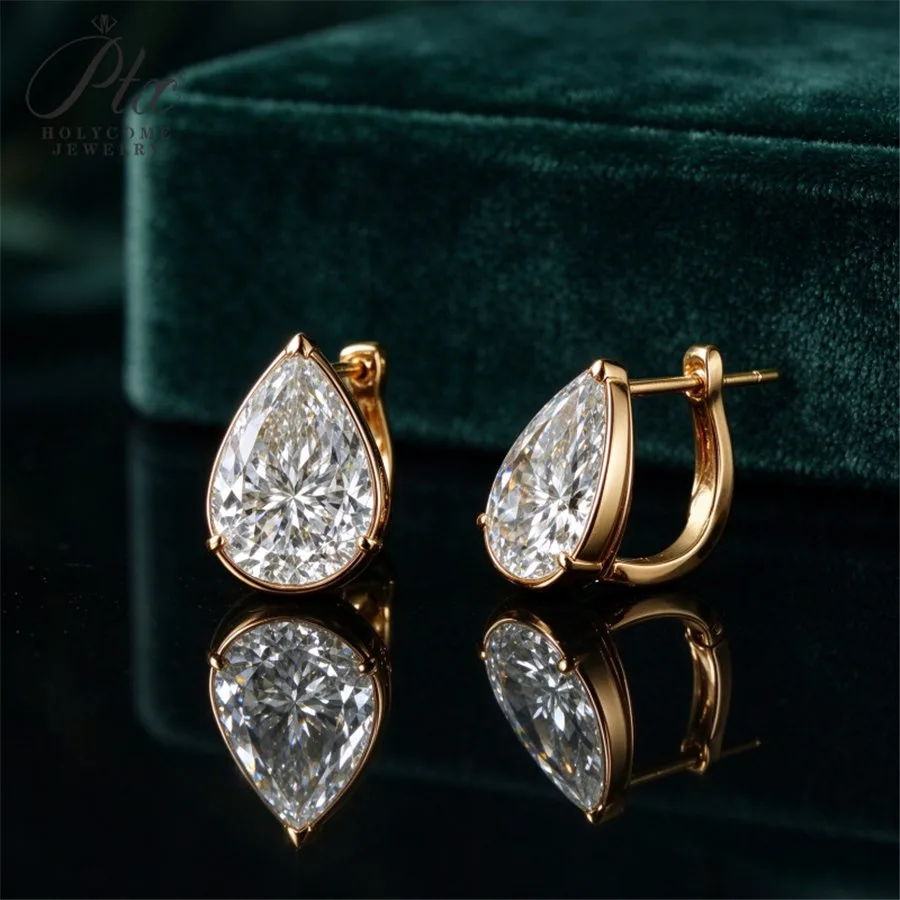
Buying moissanite on color is simpler than buying diamond, and easier to get wrong in the same breath. Moissanite is described using the diamond D to Z color scale, but clarity is rarely a genuine variable: commercial moissanite is grown to a high standard and is eye clean in almost every grade you will be offered. That narrows the real decision for a jewelry brand to two questions - which color band belongs in which product line, and how do you keep that band consistent across reorders. This guide covers what the grades actually look like, and where the labels on a supplier listing stop being useful.
How moissanite color is described
Two systems get mixed together in the trade. Some suppliers use the diamond letter scale, D (colorless) through Z (light yellow). Others use plain language: colorless, near-colorless, faint, light. A good specification sheet states the letter band and the size range it applies to, because the same stone looks whiter at 1 mm than at 2 ct. Fancy colors also exist as deliberate products - yellow, green and gray material is grown on purpose for fashion and statement pieces, and should be described as fancy rather than as a low grade.
| Band | Diamond equivalent | What your buyer sees | Where it belongs |
|---|---|---|---|
| Colorless | D-F | No visible body color in any lighting, even in large stones | Premium bridal, engagement, hero photography, platinum-look lines |
| Near-colorless | G-J | Neutral in daylight; a trace of warmth in larger stones or against a white card | The volume sweet spot: 925 silver fashion and everyday-wear programs |
| Faint to light | K and below, or grade not stated | Noticeable warmth, clearest in 1 ct and above | Entry price points, warm-toned brass with gold plating, vintage styling |
| Fancy | Not applicable | Intentional yellow, green or gray body color | Statement pieces, men's jewelry, seasonal capsules |
Why D color VVS1 on a moissanite listing is a marketing label
Clarity grading was designed for diamond, where natural inclusions are normal and their size, number and position drive price. Moissanite is grown, so the material is generally clean, and terms like VVS1, VS and eye clean frequently describe the same practical experience in a finished piece. The major international diamond laboratories focus their business on diamond and lab-grown diamond grading. The reports you will most often see with moissanite come from GRA (Gemological Research Association), and Holycome supplies GRA documentation with its moissanite.
Treat a clarity term on a moissanite listing as a statement about how carefully that supplier sorts its parcels, not as an independently verified diamond grade. The questions that change what your customer sees are more concrete: is the stone eye clean at 10x, is there a visible pinpoint or needle, is the polish free of burn marks, and does the color match the rest of the parcel?
Where color judgment really gets tested
- Size amplifies color. A 0.8 mm melee stone reads white in almost any band; a 2 ct stone exposes every trace of body color. Sort expectations by size, not by one house standard.
- Light source changes everything. Grade under daylight and under store LED. Cool-white LED exaggerates faint yellow; warm incandescent light hides it.
- Background matters. Judge on a neutral white or gray card, never on a colored tray, a gold chain or a black velvet pad.
- Metal color interacts with the stone. Yellow gold plating makes a warm stone look intentional; rhodium-plated 925 silver makes the same stone look off-white.
- Matching beats absolute grade. Your customer sees a pair of earrings, not a certificate, so match stones within the parcel before shipping.
- Photograph with a fixed setup. The same camera, distance and light source every time, or your online listings will not match the goods.
How to keep reorders consistent
- Write color band, size, shape, cut and polish into your specification sheet, not just a grade letter.
- Ask for master-set comparison photos before the first bulk order, and keep a labeled reference stone from each accepted batch.
- Request parcel photos under 5500K lighting before shipment, then inspect against your reference stone on arrival.
- Consolidate a given color band with one supplier. Sourcing the same band from several factories is the fastest route to mismatched reorders.
- Re-verify every batch. Growth runs vary, and a supplier who tells you otherwise is not inspecting.
Holycome has supplied moissanite to 100+ clients across 100+ countries for more than 18 years, with GRA-certified stones set in 925 silver and brass with gold plating. Our 7-day sampling means you can check color in your own lighting and against your own reference stone before you commit to production, and our 30-day risk-free guarantee covers the mismatch cases that sampling cannot. Browse the range at /loose-moissanite/ or send your color band and sizes to service@holycome.com via /contact-us/.