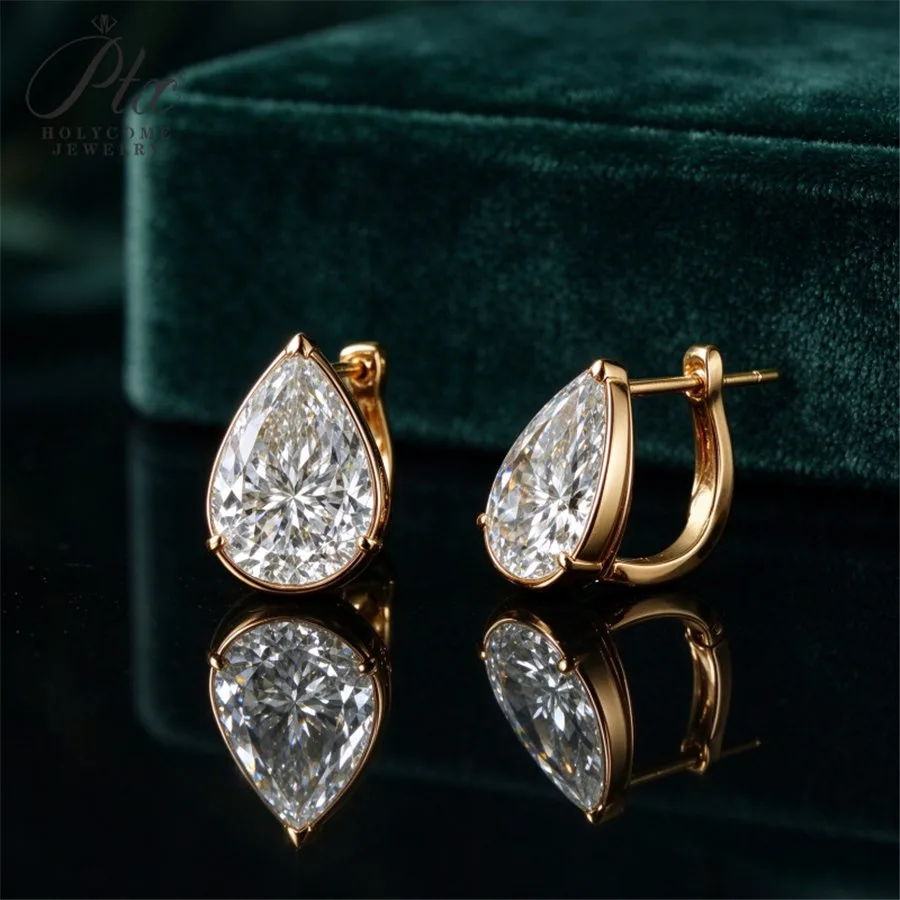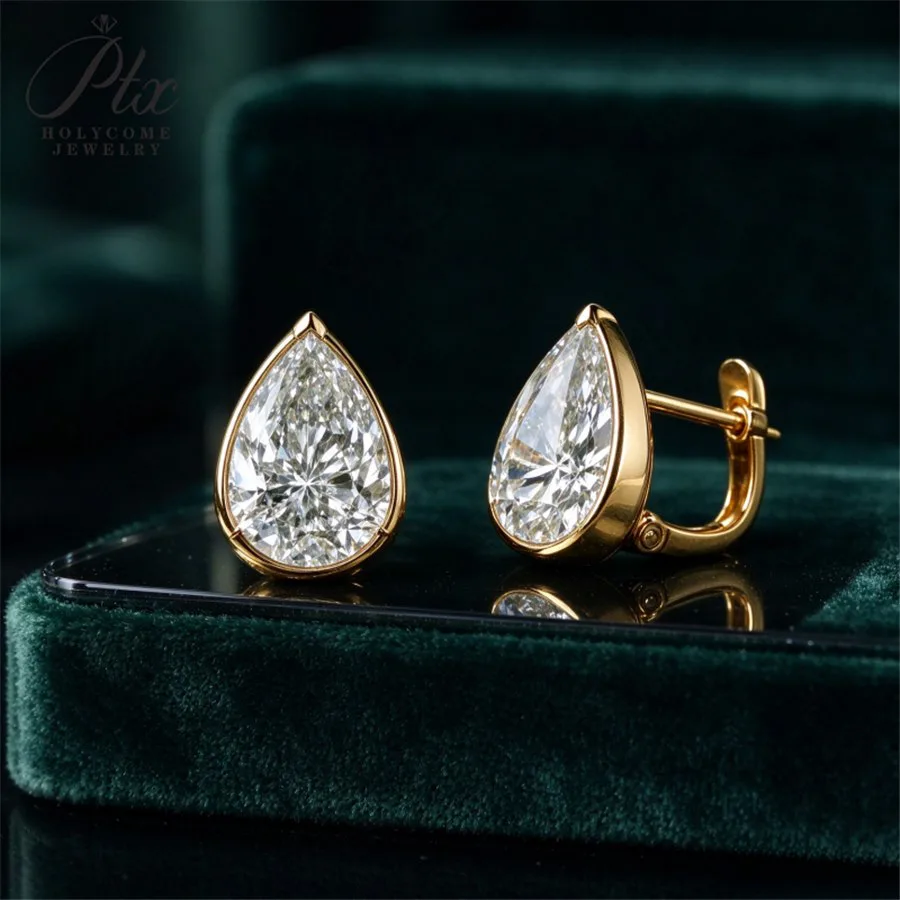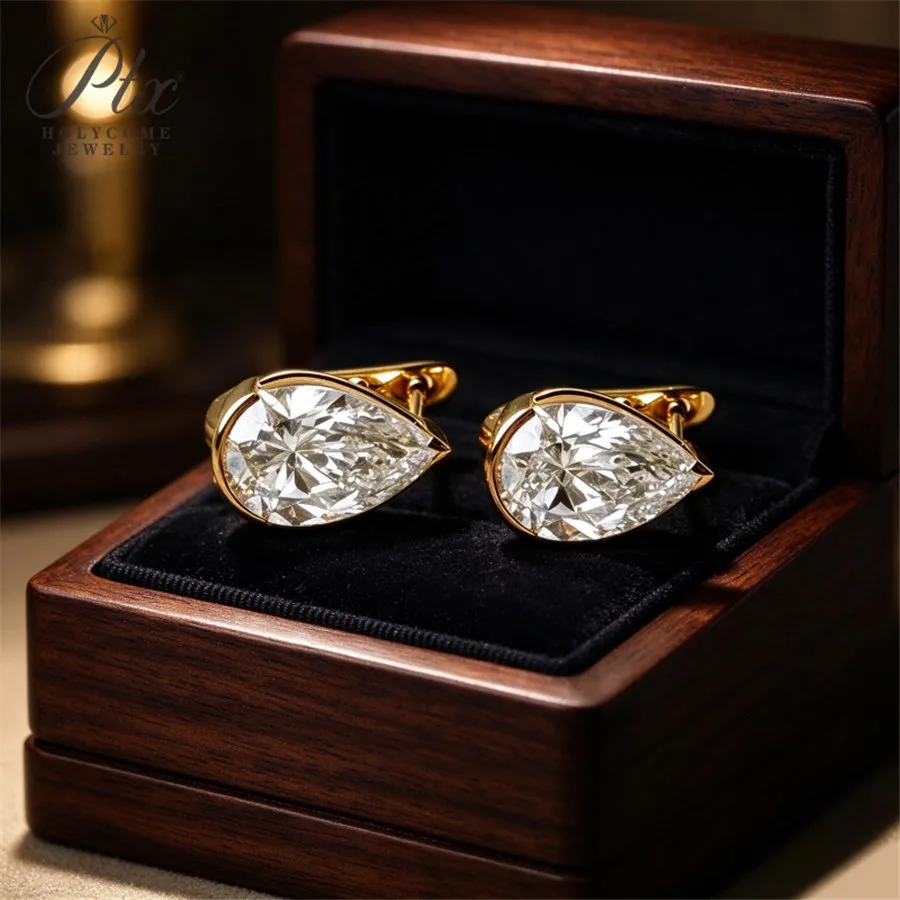

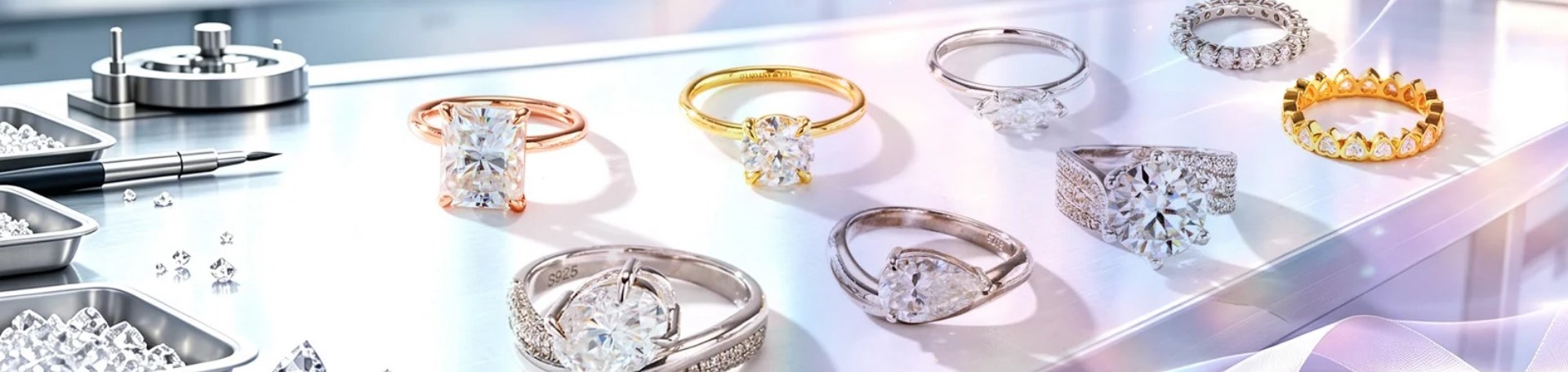
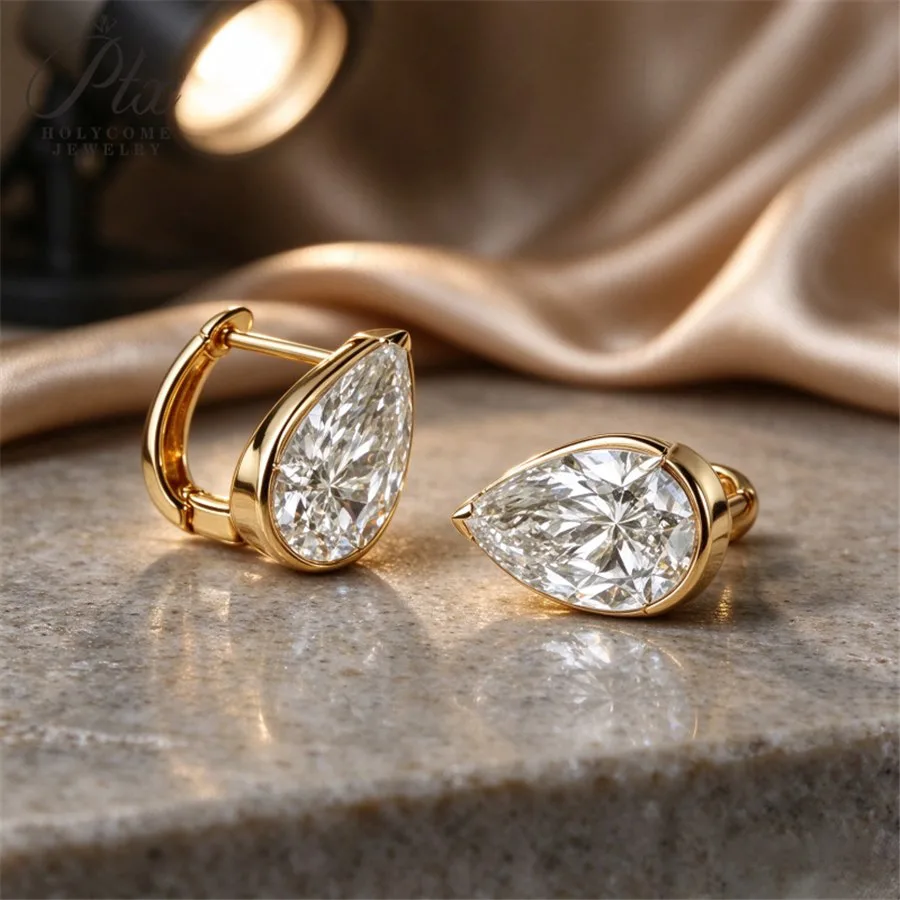
Moissanite is the stronger margin material for volume jewelry programs; diamond still wins where the customer is buying the name. For a wholesale buyer the question is not which stone is better in the abstract, but which stone belongs in which SKU, at which price, with which story. Moissanite is lab-grown silicon carbide with more fire than diamond, comparable real-world wear resistance, and a cost structure that sits well below natural diamond pricing. Diamond, whether mined or lab grown, carries a different kind of retail permission. Here is the comparison we give buyers when they are building an assortment.
Property-by-property comparison
| Property | Moissanite | Diamond (natural or lab grown) |
|---|---|---|
| Composition | Silicon carbide (SiC), grown in a laboratory | Carbon, mined or grown in a laboratory |
| Mohs hardness | 9.25 | 10 |
| Refractive index | Approximately 2.65 to 2.69 | 2.42 |
| Dispersion (fire) | About 0.104 - visibly more rainbow fire | About 0.044 |
| Typical commercial color | Colorless to near-colorless, occasional green or yellow tint | Full range; lab-grown supply skews to the top color bands |
| Typical clarity | Eye clean in most commercial grades | Wide range, priced by grade |
| Toughness in wear | No pronounced cleavage direction; generally resists girdle chipping | Perfect cleavage in one direction; can chip on a sharp impact |
| Basic thermal tester | Reads like diamond, because both conduct heat quickly | Reads as diamond |
| Certificate you will see | GRA | IGI or GIA |
| Wholesale cost position | Lowest of the three and the most stable for seasonal price lists | Lab grown: lower and still moving; natural: multiples higher |
Where moissanite earns its place in your catalog
- Volume fashion and everyday-wear lines, where the stone cost has to leave room for plating, labor and packaging.
- Studs, hoops and tennis bracelets, where small-to-medium stones show fire beautifully and color differences are invisible.
- Gift price points that sit under your customer's psychological thresholds, which is where conversion is highest.
- Display and try-on stock: a full tray of moissanite lets a retailer show many styles without tying up capital.
- Brass-with-gold-plating programs, where the metal cost is already low and moissanite keeps the whole bill of materials efficient.
- Second-look and travel pieces for bridal customers who want a matching set without a second diamond budget.
Where diamond still holds the sale
Diamond keeps its position in certificate-driven purchases, in the primary stone of an engagement ring, and with customers who want a real diamond but not a mined one - which is where lab-grown diamonds do their work. It also matters in high-end retail environments whose staff script, insurance and resale language all depend on a recognized report. Do not try to talk a certificate buyer out of a certificate; give them the lab-grown diamond option alongside natural, and keep moissanite for the customer who came in for design and price.
Cost and margin planning
Do not build a program on one headline percentage. Material cost is only one line in the bill of materials: setting labor, plating, hallmarking and assay, packaging and return rates behave differently across materials. A price ladder is more useful than a single quote. Many of our clients run brass and gold plating with moissanite as the entry step, 925 silver with moissanite as the volume engine, 925 silver or gold with lab-grown diamond as the premium step, and natural diamond only on request. Because lab-grown pricing moves, quote with a validity window and reconfirm before you commit inventory; moissanite pricing is the most stable of the three, which makes it the easiest to hold in a printed seasonal price list.
Disclosure, testing and legal hygiene
- Never allow moissanite to be sold or described as diamond. It is a different material, and in most markets misdescription is a regulatory problem, not a sales tactic.
- Buy a multi-tester that reads both thermal and electrical properties. A basic thermal probe alone cannot separate moissanite from diamond.
- State lab-grown status in writing on the invoice and in the product listing, and keep GRA, IGI or GIA documents with the shipment.
- Describe metal accurately: 925 silver, or brass with gold plating. Buyers who discover a surprise at customs or in a lab test rarely order twice.
- Train counter staff on the visual tells: moissanite facets have sharper, more distinct edges and show doubled facet reflections under a loupe.
Holycome has run OEM and ODM jewelry manufacturing for more than 18 years, serving 100+ clients and exporting to 100+ countries. We supply GRA-certified moissanite, lab-grown diamonds and lab-grown gemstones, set in 925 silver and in brass with gold plating produced in our own 800 sqm plating facility. Our silver content and brass raw materials are covered by material composition records, our factory is operating our own four-stage quality system, and we offer 7-day sampling with a 30-day risk-free guarantee. Compare stones at /loose-moissanite/ or send your target cost and quantities to service@holycome.com through /contact-us/.